Mangoes in India: A Land of Endless Varieties and Flavor
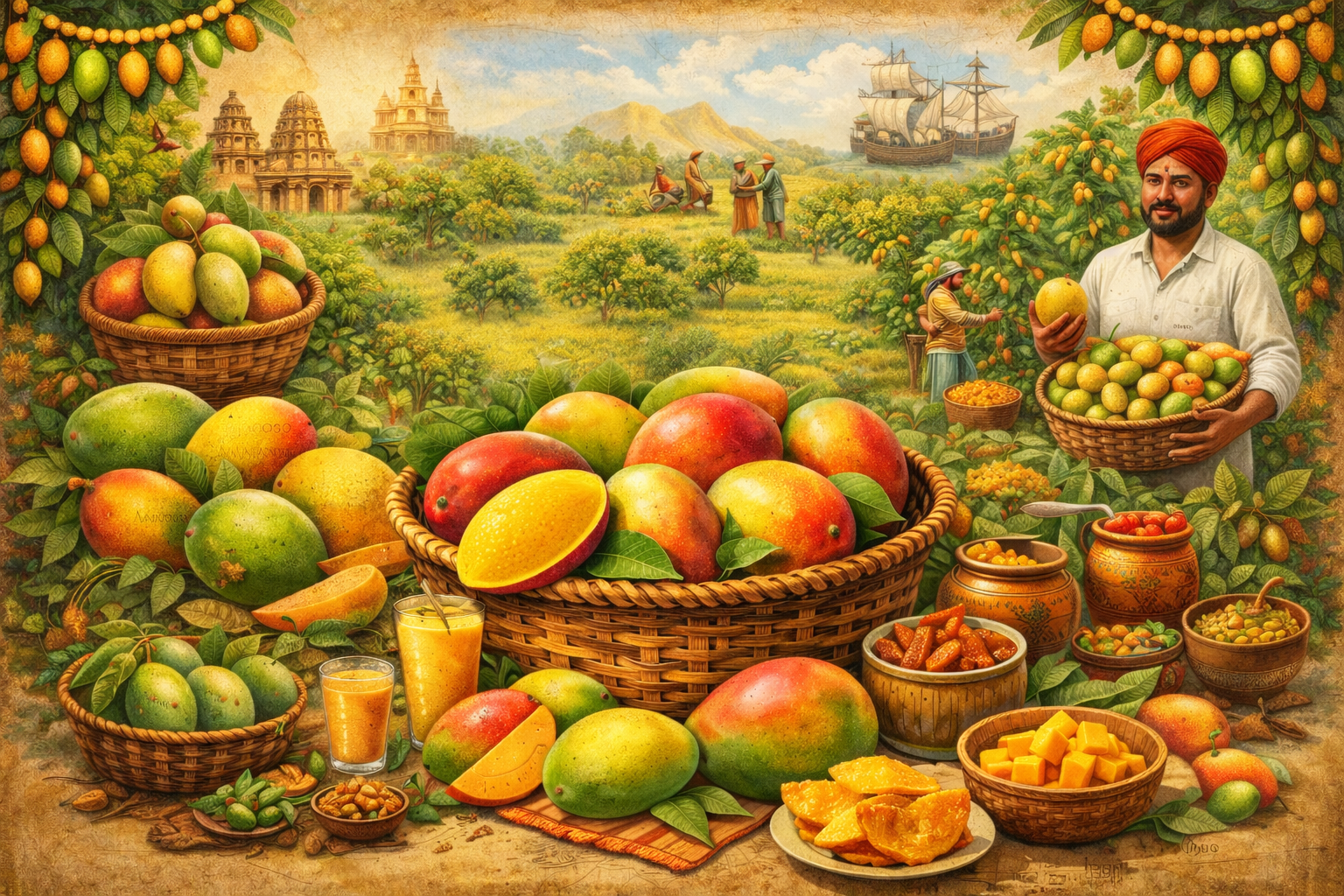
India and mangoes share a relationship that goes far beyond agriculture—it is a bond rooted in culture, history, and identity. Known as the “king of fruits,” the mango is not just widely loved across India but is also deeply embedded in its traditions, cuisine, and economy.
A Nation of Mango Diversity
India is home to an astonishing variety of mangoes—over 1,000 different types are believed to exist across the country. Out of these, around 300 varieties are commercially grown, each offering a unique taste, texture, aroma, and appearance.
Some of the most famous mango varieties include:
Alphonso (Hapus) – Known for its rich sweetness and smooth texture, mainly grown in Maharashtra.
Dasheri – A fragrant, juicy mango popular in North India, especially Uttar Pradesh.
Langra – Slightly tangy and fibrous, widely grown in Bihar and Uttar Pradesh.
Banganapalli (Benishan) – A large, sweet variety from Andhra Pradesh.
Kesar – Bright orange pulp and distinct aroma, mainly from Gujarat.
Totapuri – Recognizable by its beak-like tip, often used for processing and pickles.
Himsagar – A soft, juicy mango from West Bengal with minimal fiber.
Each region of India proudly celebrates its local mango variety, often considering it the best.
Mango Production Across Indian States
India is the largest producer of mangoes in the world, contributing nearly 40–50% of global production. Mangoes are grown in over 20 states, thanks to the country’s diverse climate.
Major mango-producing states include:
Uttar Pradesh – The largest producer in India.
Andhra Pradesh
Karnataka
Maharashtra
Gujarat
Bihar
West Bengal
Tamil Nadu
Telangana
Odisha
Among these, Uttar Pradesh, Andhra Pradesh, and Karnataka together contribute a significant share of the total production.
Seasonal Delight
Mango season in India typically begins in March and lasts until July, though this varies by region and variety. Early varieties arrive in spring, while late-season mangoes extend into the monsoon months.
During this time, markets across the country are filled with vibrant piles of mangoes, and families eagerly await the seasonal treat.
Cultural and Traditional Importance
Mangoes are more than just fruit in India—they hold deep cultural meaning:
Mango leaves are used in decorations during festivals and weddings.
The fruit symbolizes prosperity, love, and abundance.
Mango motifs are commonly seen in art, textiles, and architecture.
Ancient texts and poetry frequently mention mangoes as symbols of beauty and fertility.
Culinary Versatility
Indian cuisine uses mangoes in countless ways, both ripe and raw:
Ripe mangoes are eaten fresh, blended into smoothies, or used in desserts like aamras, mango lassi, and ice creams.
Raw mangoes are used in chutneys, pickles, curries, and drinks like aam panna.
Mango pulp is also processed into juices, jams, and dried products for year-round consumption.
Economic Importance
Mango farming supports millions of farmers across India. The fruit is a major contributor to the agricultural economy and is exported to countries around the world, including the Middle East, Europe, and the United States.
India exports premium varieties like Alphonso and Kesar, which are highly valued internationally.
A Fruit That Defines a Nation
Mangoes are not just a crop in India—they are a celebration. From roadside stalls to royal feasts, from village orchards to global markets, mangoes connect people across regions and generations.
Whether it’s the creamy Alphonso from the west, the juicy Dasheri from the north, or the flavorful Banganapalli from the south, every mango tells a story of its land.
In India, mango season isn’t just a time of year—it’s an emotion.