The Sweet Journey of Mangoes: A Historical Delight
Few fruits capture the imagination and taste buds quite like the mango. Often referred to as the “king of fruits,” mangoes are beloved for their rich flavor, vibrant color, and cultural significance across the world. But beyond their juicy sweetness lies a fascinating history that stretches back thousands of years.
Ancient Origins in South Asia
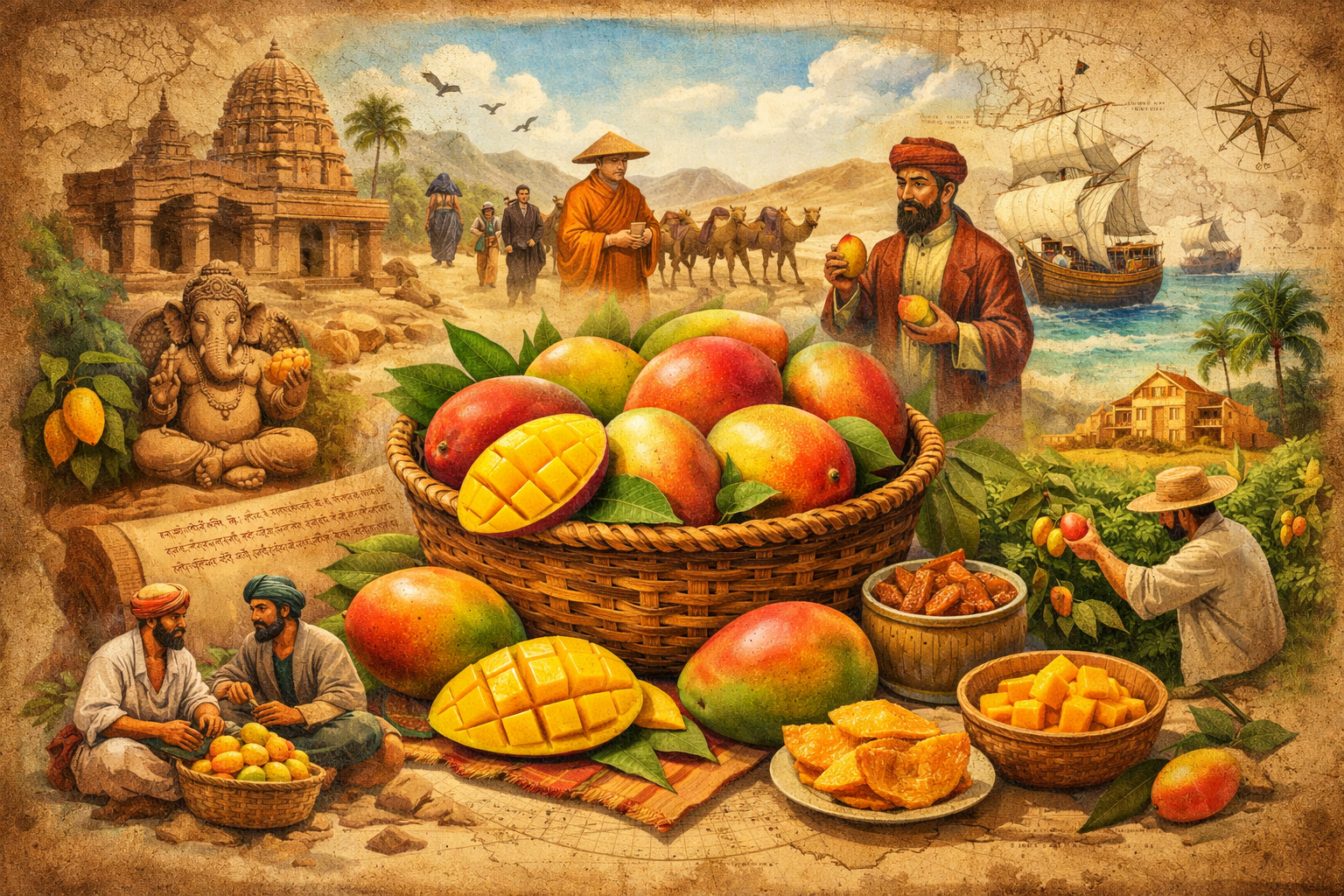
The story of mangoes begins over 4,000 years ago in the regions of present-day India, Myanmar, and Bangladesh. Here, wild mango trees first grew in tropical forests, eventually being cultivated by early farmers who recognized their value. Mangoes quickly became more than just a food source—they were woven into religious rituals, art, and literature.
In ancient India, mangoes held sacred significance. They were associated with love, prosperity, and fertility. The fruit and its leaves were often used in ceremonies and decorations, and references to mangoes appear in early Sanskrit texts. Even rulers took a special interest—historical accounts describe kings planting vast mango orchards as symbols of wealth and generosity.
Spreading Across Asia
As trade routes expanded, so did the reach of mangoes. By around the 4th and 5th centuries BCE, mango cultivation had spread to Southeast Asia. Travelers, traders, and Buddhist monks played a key role in carrying mango seeds and plants across regions.
Mangoes adapted well to new climates, and over time, many varieties emerged, each with unique flavors, textures, and colors. In countries like Thailand, Indonesia, and the Philippines, mangoes became an essential part of local cuisine and culture.
Journey to the Middle East and Africa
The westward journey of mangoes began around the 10th century, when Persian traders introduced the fruit to the Middle East and East Africa. The mango’s ability to thrive in tropical climates made it well-suited to these regions.
In these areas, mangoes were quickly embraced for both culinary and medicinal uses. They were eaten fresh, dried, or used in dishes and beverages, becoming a staple in many local diets.
Arrival in Europe and the Americas
Mangoes reached Europe much later, during the Age of Exploration in the 15th and 16th centuries. Portuguese explorers played a crucial role in transporting mango plants from India to Africa and Brazil. From there, mangoes spread across the Americas, particularly in tropical regions such as the Caribbean.
Initially, mangoes were considered exotic and rare in Europe due to the difficulty of transporting fresh fruit over long distances. However, preserved mango products like pickles became popular.
In the Americas, mango cultivation flourished. Countries like Mexico, Brazil, and Peru developed thriving mango industries, producing fruit for both local consumption and export.
Modern-Day Mangoes
Today, mangoes are grown in more than 100 countries around the world. India remains the largest producer, contributing a significant portion of global supply. Hundreds of varieties exist, from the sweet and creamy Alphonso to the tangy and fibrous Tommy Atkins.
Mangoes are now enjoyed in countless ways—fresh, in smoothies, desserts, chutneys, and even savory dishes. Their global popularity continues to grow, making them one of the most widely consumed fruits on Earth.
A Fruit with a Rich Legacy
From ancient forests in South Asia to modern supermarkets worldwide, the mango has traveled an extraordinary path. Its history is a testament to human curiosity, trade, and cultural exchange. More than just a fruit, the mango carries centuries of tradition, flavor, and symbolism.
The next time you take a bite of a mango, you’re not just tasting sweetness—you’re experiencing a piece of history that has ripened over thousands of years.